Table Of Content
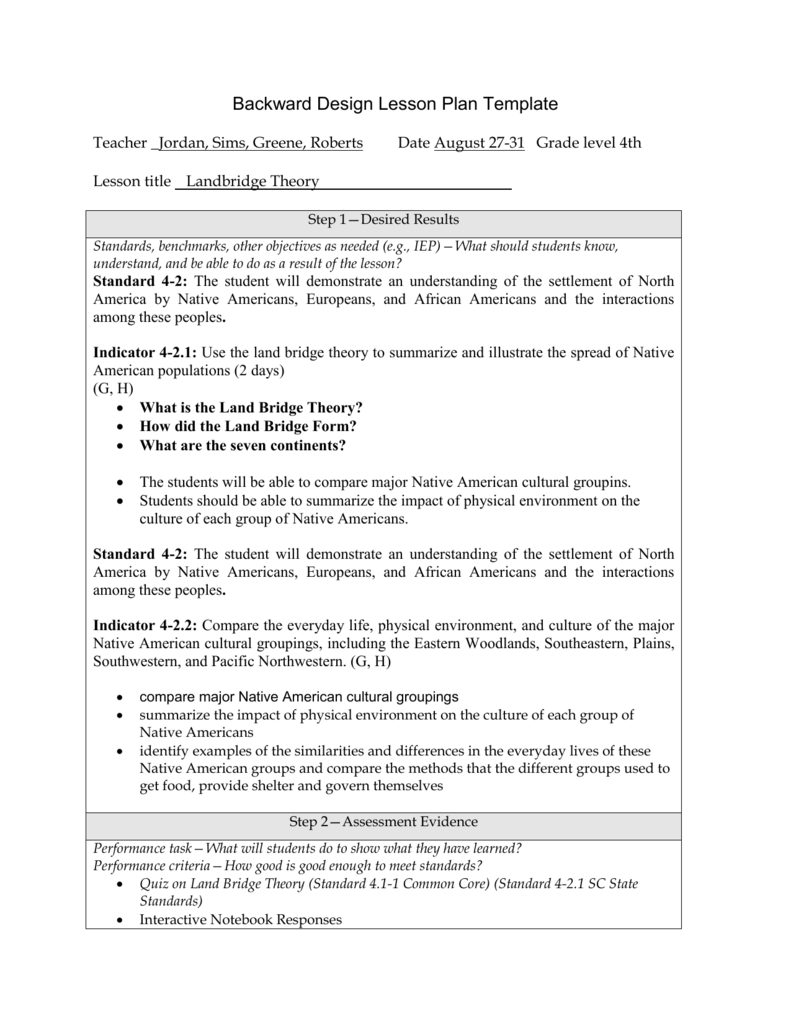
Some teachers may fear that backward design emphasizes “teaching to the test,” which puts unfair pressure on students to learn for the sake of the final assessment. However, it is up to the skilled teacher to emphasize the process of gaining new knowledge, as opposed to acing the final test. While it can be difficult to grasp at first, backward design encourages educators to be intentional with their lesson planning, since it imbues the class time with a specific purpose. Backward design challenges "traditional" methods of curriculum planning. In traditional curriculum planning, a list of content that will be taught is created and/or selected.[4] In backward design, the educator starts with goals, creates or plans out assessments and finally makes lesson plans. Supporters of backward design liken the process to using a "road map".[5] In this case, the destination is chosen first and then the road map is used to plan the trip to the desired destination.
Encourages Higher-Order Thinking
There are merits to both traditional lesson planning and backward lesson design, but key differences can create challenges for some teachers and students. Instructional strategies are the teaching methods by which you present new information to your students. Methods can include teacher-centered approaches like demonstrations or lectures, or student-centered approaches like peer discussion and inquiry-based learning. Your backwards lesson planning should incorporate both instructional strategies and instructional activities.
Corporate Training
However, proponents argue that the time investment upfront often leads to more effective and efficient teaching down the line. This is particularly burdensome for educators who may already be grappling with other responsibilities like grading, classroom management, and ongoing professional development. Finally, the Zone of Proximal Development, a concept introduced by Russian psychologist Lev Vygotsky in the early 20th century, also supports the effectiveness of Backward Design.
Backward Design as a Curriculum-Development Model
Many educators find ways to adapt the approach to suit different learning environments and needs. This knowledge is considered knowledge worth being familiar with. Information that fits within this question is the lowest priority content information that will be mentioned in the lesson, unit, or course. Since its publication in the 1990s, Understanding by Design has evolved in series of popular books, videos, and other resources.
Alignment of learning objectives to learning activities
These random activities are taking up precious time that could be spent on much more valuable stuff. I mean, even though I loved the book, my students’ response to it was mostly lukewarm. Maybe it was the connections I was able to make to the stuff students dealt with on a day-to-day basis.
Building Better, Not Backward: Learning from the Past to Design Sound Border Asylum Policy - Refugees International
Building Better, Not Backward: Learning from the Past to Design Sound Border Asylum Policy.
Posted: Fri, 18 Dec 2020 08:00:00 GMT [source]
We are now a jewel of a company 30+ persons strong and growing with four locations to serve you. By way of example, consider a paralegal instructor who wants students, as a result of her instruction, to be able to prepare case briefs. She could begin a class by sharing a summary of cases she finds fascinating and then spend time discussing the cases with students. However, this might not be the preferred use of instructional time when the goal is helping students understand how to produce a case brief and why being able to do so matters. However, the backward design approach provides an authentic learning experience relevant for both the educator and the student when deployed effectively.
WHY SHOULD I USE BACKWARD DESIGN IN MY COURSES?
I taught that book a few times, and even though I looked forward to it every time, I always finished the unit a little unsatisfied. When I taught seventh grade language arts, one of my favorite things to teach was S.E. After we did some reflecting, writing, and talking, we were ready to start the book.
Backward Design can be summarized as a process or model for designing instructional materials where the instructor or instructional designer focuses on the desired end results (i.e., the outcome) of a class or course instruction. The designer then identifies what types of evidence are sufficient proof of the desired end result. The designer works “backwards” from that end goal and intentionally plans and develops supporting instruction and learning experiences around the desired outcomes and evidence[1]. In other words, what will students be able to do after successfully completing your course? Once you define what the student learning outcomes are for your course, then you need to determine how you will know students successfully met these outcomes. This is often in the form of a major assessment (e.g, project, paper, exam).
Additional Resources
If it turns out that those favorite lessons don’t really align with any standards, you might be able to revise them so they do. Or you might keep them for other reasons—not every minute of class time has to be spent on standards-based instruction. Some activities have value because they help us get to know each other better, they help students develop social-emotional skills, or they simply offer a bit of fun. But if a lesson doesn’t do any of these things, if it’s disguised as learning but is doing little more than keeping students busy, it’s time for it to go. When teachers use Backward Design, they can consult Bloom's Taxonomy to identify the level of cognitive skills they wish students to attain.
This is in contrast to schools and teachers who want to have as many students as possible attain high scores. Furthermore, when a teacher designs a lesson without a plan for the final assessment, they may be tempted to add activities or units to the lesson just for the sake of filling class time. Students of all ages know when they are asked to do something pointless in class; they can spot “busy work” from a mile away, and will disengage as they see fit. Wiggins and McTighe have created a six-part checklist built on the acronym WHERETO that consists of key elements that should be included in your instructional materials and learning activities. Backward Design serves as more than just a tool for curriculum planning; it represents a shift in how we think about education. Instead of starting with what educators want to do, it starts with what students need to learn.
Grant Wiggins and Jay McTighe introduced backward design in their book Understanding by Design. In contrast to the traditional “forward design” approach, backward design begins by establishing learning goals and then developing assessments and teaching methods to achieve the desired outcomes. The backward design approach to curriculum development first establishes educational goals and then builds assessment and instruction to serve those goals. The process of planning assignments and lessons by instructors to achieve pre-set instructional goals is called backwards mapping.
Predictably, some fell behind in the book like they did with all assigned reading. Research over the past several decades has shown that students learn more and retain their learning longer if they acquire it in an active rather than a passive manner. To learn more, consult CATE’s Active Learning Teaching Guide. Examples of summative assessments include exams, portfolios, presentations, written work. The rigidity of the Backward Design framework has also been critiqued by educators like Sir Ken Robinson, who champion the benefits of creativity and freedom in educational settings.
Unlike Backward Design, which is highly structured around pre-set objectives and assessments, Montessori is far more exploratory and driven by the student's own interests. Dr. Benjamin Bloom, who created Bloom’s Taxonomy of learning objectives, often adhered to this method. While it is still widely used, Forward Design can sometimes lead to misalignment between learning objectives and assessments, something that Backward Design explicitly seeks to avoid.
This focus could overshadow other crucial aspects of education, such as fostering a love for learning, encouraging creativity, and developing social skills. The concern here is the potential for "teaching to the test" at the expense of a more holistic education. When discussing the theoretical foundations of Backward Design, it's impossible to ignore Constructivism. This educational theory was primarily influenced by the works of Jean Piaget, a Swiss psychologist, who introduced these ideas in the mid-20th century.


No comments:
Post a Comment